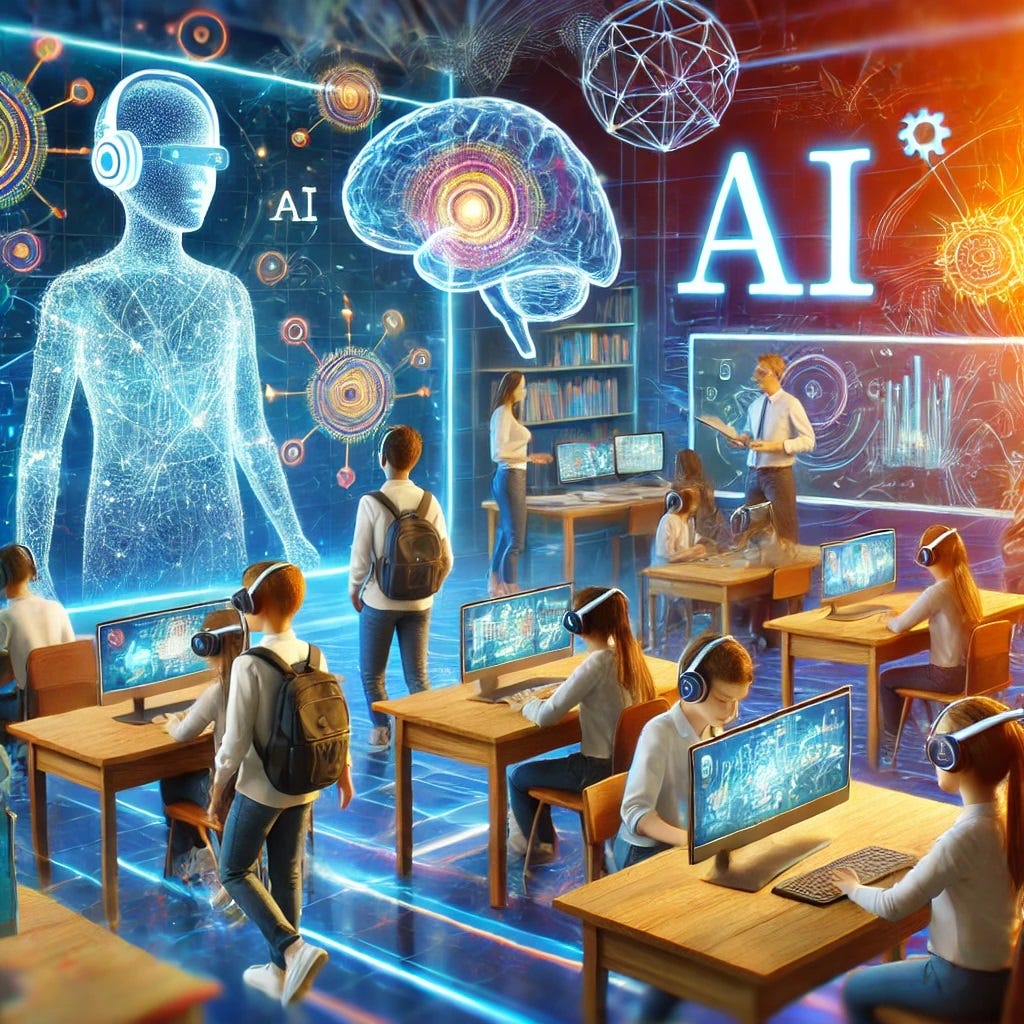
Exploring how artificial intelligence is transforming education through deep learning, neural networks, and innovative applications that promise to revolutionize how we learn and teach.
Explore the ResearchAI systems designed to perform specific tasks like facial recognition in cameras or navigation systems. These are the AI applications we interact with daily.
Computer systems capable of learning and solving problems not anticipated by developers, competing with humans on general cognitive ability.
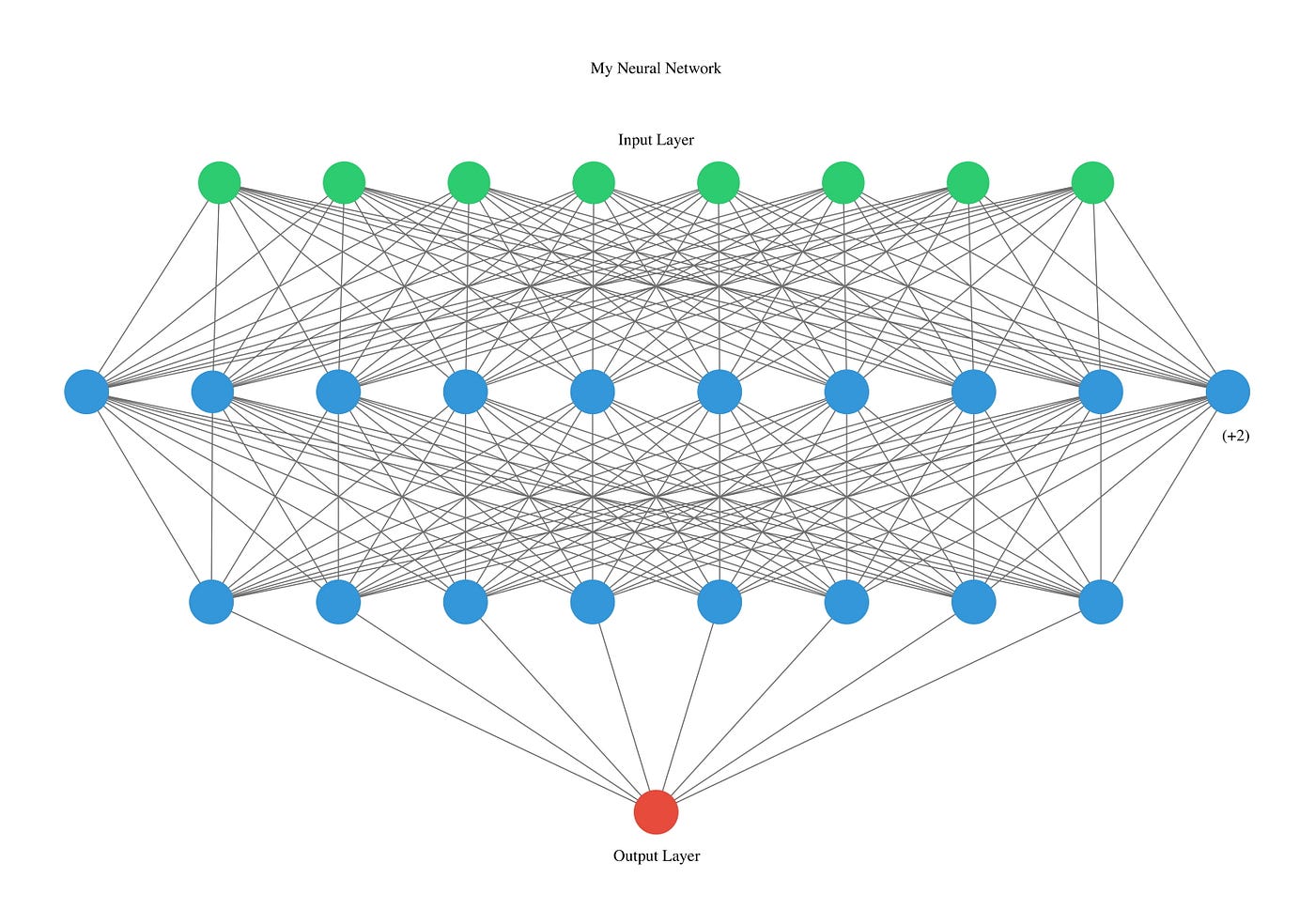
The combination of deep learning and neural networks, creating hierarchical structures that model human learning and problem-solving patterns.
Based on hierarchical interpretation of knowledge and thought processes, similar to how computational linguistics breaks down language into phrases, words, morphemes, and phonemes. Deep learning algorithms define layers from high-level concepts down to granular details.
Modeled after the physical connections of neurons in the human brain, these networks attempt to replicate thinking and learning patterns through computational nodes that process data, similar to how axons and dendrites govern neuron interactions.
Expanding sources of massive digital databases support AI's increasing power. As AIs develop pattern recognition capabilities, huge data sets allow them to conduct deeper analyses of human and environmental behavior.
Facebook's Deeptext interprets user posts to curate personalized advertising recommendations.
Sentient Technologies works with Tata Group on massively distributed ML systems for financial markets and medical research.
AlphaGo became the first AI to defeat human Go champions, requiring intuition-like decision making beyond brute force calculation.
Amazon and Google released in-home AI assistants, making cloud-based AI accessible through home appliances.
Google's TensorFlow makes machine learning accessible to anyone using their second-generation machine intelligence software.
IBM's Watson processes medical literature to assist healthcare professionals in forming accurate diagnoses.
Provides enhanced analytics of educational data including individual student insights, gathering data from demographics, academic history, course enrollment, interests, behaviors, and social characteristics.
An AI-powered toy for children aged 5-9 that connects via WiFi to Watson's AI, engaging children in conversation, answering questions, playing games, and providing instruction in spelling and meditation.
Georgia Tech used Watson's AI as a teaching assistant, interacting with students online to answer questions. Students were unaware it was AI and reported positive impressions, even inviting it to social events.
Combining ML with student data to create completely personalized educational programs designed for each learner individually.
Real-time adaptation of learning experiences based on immediate interpretation of learner needs and available resources.
AI recognition of students needing help, immediately notifying teachers to engage at precise moments of need.
AI cannot provide the diverse group interactions needed for effective socialization in child development.
Personal connections through shared presence and physical touch support emotional and mental development that AI cannot substitute.
AI decision-making in education requires careful consideration of ethics, organizational mission alignment, and social values.
Educational institutions should begin adoption now. The greater the distance between current resources, practices, and organizational culture and the goal of proposed change, the longer the adoption process takes.
Educational leaders must develop adaptive capacity in their institutions, as this ability will determine their continued relevance in offering educational value.
This article was written in December 2016. The author expresses gratitude to Abhishek Kathuria for encouragement and support.
Alberts, Steven. "Dr. Steven Alberts on Watson for Clinical Trial Matching" https://www.youtube.com/watch?v=v6b7XgaOIxk. April 14, 2015.
Brooks et al. "Artificial Intelligence and Life in 2030: One Hundred Year Study on Artificial Intelligence." Stanford University. 2016.
Executive Office of the President, National Science and Technology Council Committee on Technology. "Preparing for the Future of Artificial Intelligence." White House Report. 2016.
Georgia Institute of Technology. "Artificial intelligence course creates AI teaching assistant." ScienceDaily. May 9, 2016.
Jacobstein, Neil. Artificial Intelligence. Conference Presentation: Singularity University New Zealand Summit. November, 2016.
Kurzweil, Ray. How to Create a Mind: The Secrets of Human Thought Revealed. Viking Penguin Publishing. 2012.
New Media Consortium. 2016 NMC Technology Outlook, Cooperative Extension. New Media Consortium. 2016.
Ross, Alex. The Industries of the Future. Simon & Schuster. 2016.
Sagar, Mark. Baby X. Conference presentation: Singularity University New Zealand Summit. November 2016.
Susskind, D., Susskind, R. The Future of the Professions: How Technology will Transform the Work of Human Experts. Oxford University Press. 2015.
Yang, Gary. "The History of Artificial Intelligence." Excerpt from History of Computing. University of Washington. 2006.